

Buying beef directly from a ranch is different from picking up a package of steaks at the grocery store.
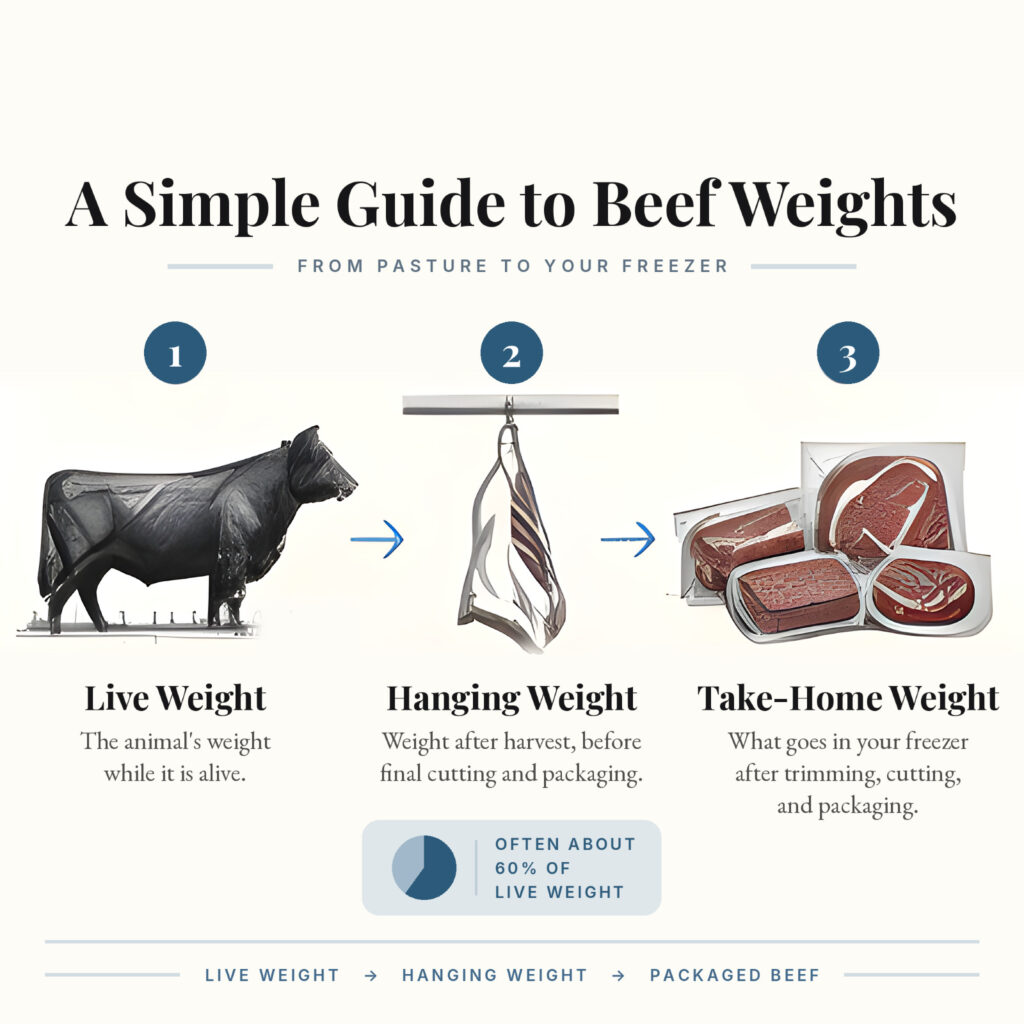
When you buy a side of beef, there are three different weights that come into play: live weight, hanging weight, and take-home weight. Understanding the difference makes the process much easier and gives you a clearer picture of what you are actually buying.
At Triple JC Ranch, we want you to understand what you are buying – not just the number on the invoice.
What Is Live Weight?
Live weight is exactly what it sounds like: the weight of the animal while it is alive.
It is the starting point, but it is not the amount of beef that will end up in your freezer.
During processing, the hide, head, internal organs, and other portions that do not become packaged beef are removed. The weight then continues to change through chilling, dry aging, trimming, cutting, and packaging.
That is why hearing what an animal weighs live does not mean that is the amount of beef you will bring home.
What Is Hanging Weight?
After the animal is processed, the remaining carcass is weighed. This is commonly referred to as the hanging weight.
By this stage, the hide, head, internal organs, and other non-carcass portions have been removed, but the beef has not yet gone through dry aging, final trimming, cutting, and packaging.
Hanging weight is an important number to understand because it is commonly used during purchasing and processing.
As a general reference, hanging weight is often approximately 60-64% of the animal’s live weight. That percentage can vary by animal, so it should be treated as a guide rather than a guaranteed yield.
But hanging weight still is not take-home weight.
What Is Take-Home Weight?
Take-home weight is the beef that has been dry-aged, cut, trimmed, packaged, and is actually ready to go into your freezer.
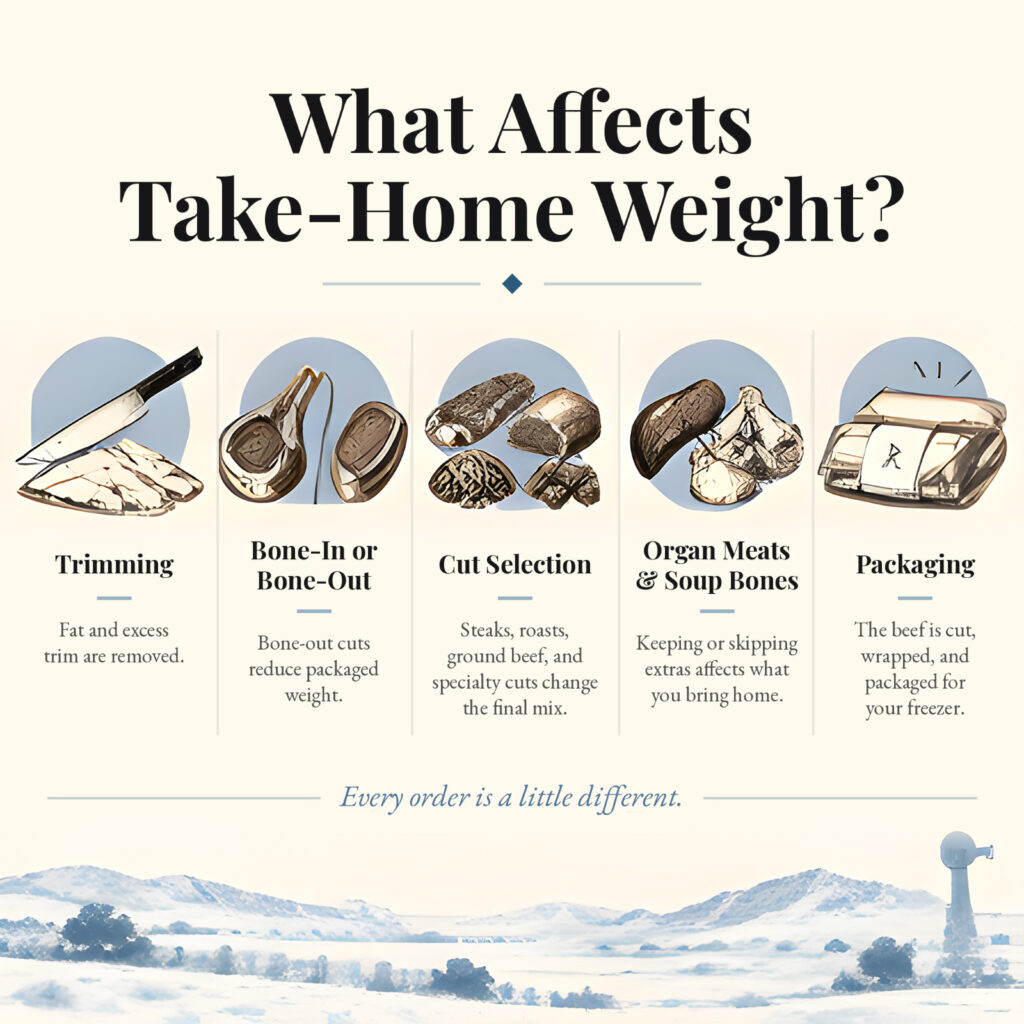
Between hanging weight and take-home beef, additional weight is naturally lost through the aging and cutting process. That can include:
- Moisture loss during dry aging
- Bone removal, depending on your cut selections
- Trimming
- Fat removal
- Individual cut and packaging choices
This is also where your cut sheet starts to matter.
Someone who chooses more bone-in cuts may take home a different amount than someone who prefers more bone-out cuts. The balance of steaks, roasts, ground beef, and specialty cuts also changes the final packaged weight.
There is not one take-home number that applies perfectly to every animal or every customer.
So, Why Does the Weight Change So Much?
Because you are buying an animal – not a box of identical manufactured products.
Every animal is a little different. Size, body composition, genetics, finishing, dry aging, trimming, processing, and the cuts you select can all affect what eventually comes home.
A simple way to think about it is:
LIVE WEIGHT → HANGING WEIGHT → CUT + TRIM → PACKAGED BEEF
Each step serves a different purpose, and each step changes the number on the scale. That is normal.
Your Cut Choices Matter
One advantage of buying beef directly from a ranch is having more control over how your beef is cut and packaged.
Depending on the order and available processing options, you may be able to make choices about:
- Steak thickness
- Roast sizes
- Ground-beef package size
- Bone-in versus bone-out cuts
- Short ribs
- Brisket
- Stew meat
- Bones
- Organs
- Specialty cuts
Those decisions affect both what you bring home and how you use the animal.
A family that cooks a lot of burgers may make different selections than someone who wants more roasts and bone-in steaks. That is part of the value of buying direct.
What Does a Side of Beef Look Like in the Freezer?
For a side of beef, Triple JC Ranch recommends planning for approximately 17.5-18 cubic feet of available freezer space.
The exact amount of packaged beef will vary by animal and by your cut selections, so freezer space is best treated as a planning recommendation rather than a yield calculation.
Want more detail? See our freezer-space guide for upright versus chest freezers, organization tips, and ways to plan before pickup day.
Questions to Ask Before You Order
You do not need a ranching background to buy beef directly. Before ordering, it helps to understand a few basics:
- How will my order be weighed?
- What cut and packaging options are available?
- How much freezer space should I have ready?
- What should I expect before pickup?
If something is unfamiliar, ask. We would rather explain the process before your order than have you guessing when the beef reaches your freezer.
Ready to See What’s Available?
Triple JC Ranch offers Colorado-raised beef by the side, custom-cut options, and additional beef offerings as inventory becomes available.
Check current availability or ask about upcoming pre-orders.
Frequently Asked Questions
Is hanging weight the amount of beef I take home?
No. Hanging weight is measured before the beef is dry-aged, fully cut, trimmed, and packaged. Your final take-home weight will be lower.
Why does take-home weight vary?
Every animal is different, and your cut selections also affect the final packaged weight. Bone-in versus bone-out cuts, trimming, specialty cuts, and other processing choices all make a difference.
How much freezer space should I plan for?
For a side of beef, plan for approximately 17.5-18 cubic feet of available freezer space. Your exact needs may vary with the animal and your cut and packaging choices.
Can Triple JC Ranch help me understand the cut sheet?
Yes. If you are unfamiliar with buying beef directly, we can help explain the process and the options available so you can make selections that fit the way your household actually cooks.