

COLORADO HIGH-COUNTRY CATTLE
Quality Starts With the Cattle.
Our cattle are raised and finished on the ranch, with the family involved in their care through the final stage before processing. Here’s how cattle selection, an approximately 90-day grain finish, USDA-inspected processing and a minimum 14-day dry age come together—and what it means when you buy beef directly from us
WHAT WE LOOK FOR
Good Beef Starts With Good Cattle.
The final product is influenced by decisions made long before an animal reaches the finishing stage.
Genetics & Selection
We work with Angus-Simmental cattle and consider genetics alongside the individual animal. Estimated Progeny Differences (EPDs) help inform breeding decisions; health, structure and condition are assessed as part of the whole picture.
Suited to the High Country
Colorado’s elevation, terrain and changing weather all influence cattle management. We look for healthy, functional animals that handle their environment well, rather than judging them on size alone.
Hands-On Care
Our family stays involved in feeding, checking condition and evaluating individual cattle as they develop. Those everyday observations help guide the next step, including when an animal is ready for finishing and processing.
RAISING CATTLE AT ELEVATION
The Environment Matters.
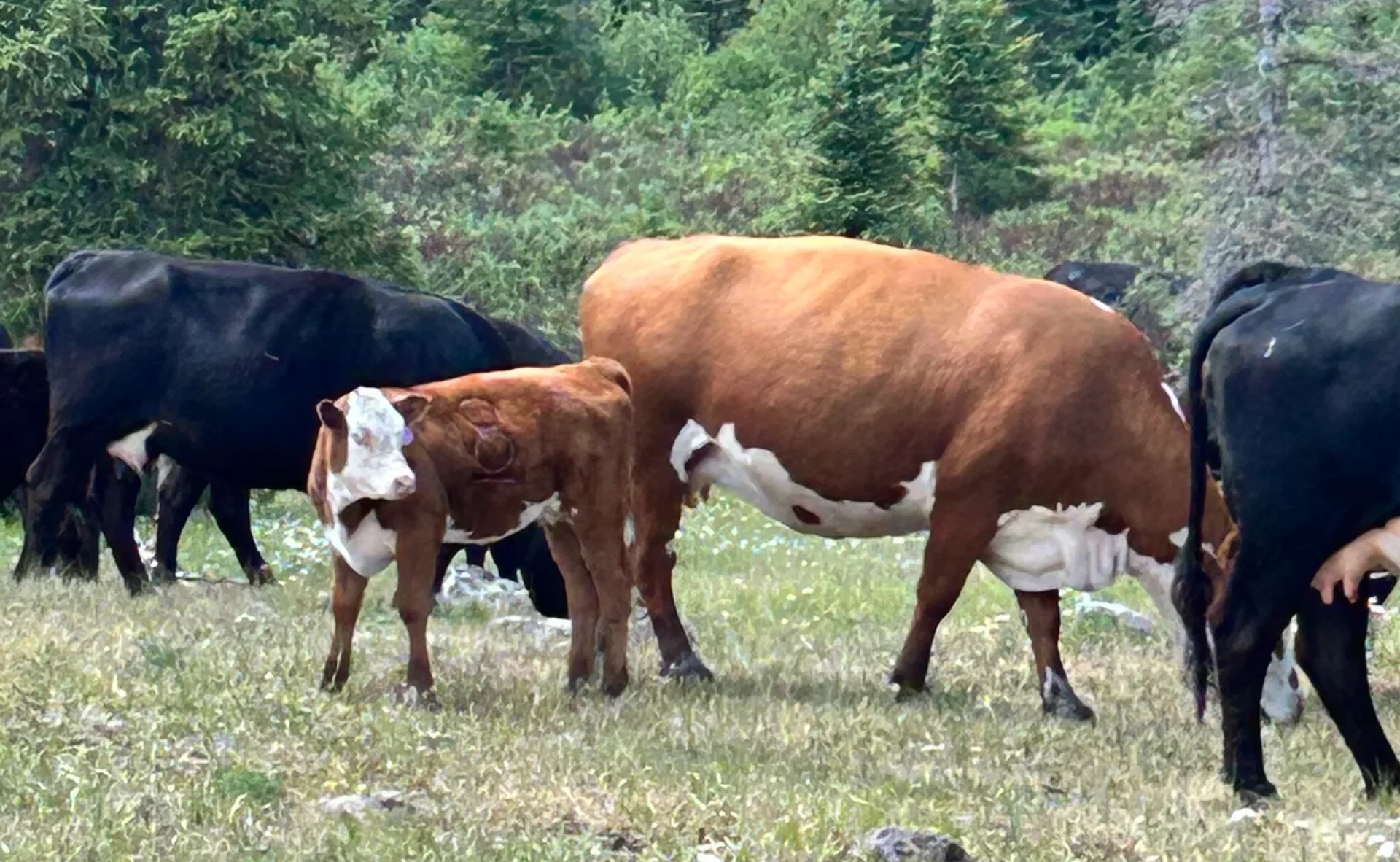
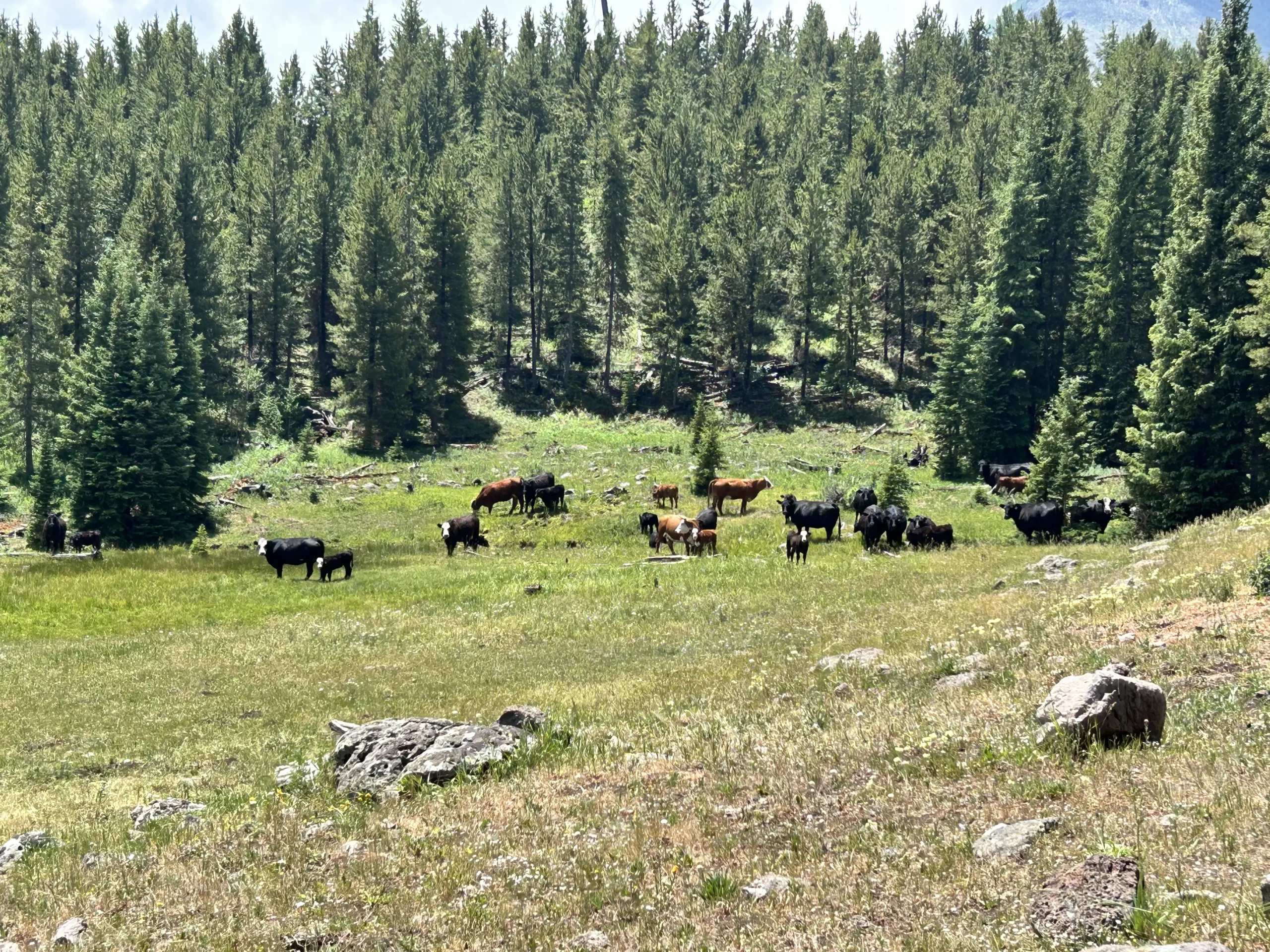
Colorado’s high country is more than a backdrop to Triple JC Ranch. Elevation, terrain, changing weather, and seasonal conditions all become part of managing cattle well.
That means paying attention to more than growth alone.
We look at the whole animal — health, structure, condition, performance, and how cattle respond to the environment around them.
The cattle have to work for the ranch they’re raised on.
FINISHING ON THE RANCH
Raised Here. Finished Here
Our cattle stay on the ranch through the finishing stage. Rather than being raised here and sent somewhere else to finish, they remain under our care until they are ready to leave for processing.
Over approximately 90 days, finishing grains are introduced gradually and increased as the animal progresses. The goal is to provide additional energy for continued growth and support the development of marbling, building on the genetics, health, and management that came before it.
We watch the cattle throughout the process rather than simply counting days on a calendar. Ninety days is a guideline — the animal still has to be ready.
APPROX. 90 DAYS — THE ANIMAL SETS THE PACE.
HOW IT WORKS
From Ranch to Freezer
Buying beef directly from a ranch is different from buying individual packages at the grocery store. Here’s how the process comes together.
01
Select + Raise
Cattle selected with genetics, health and Colorado conditions in mind.
02
Care + Evaluate
Hands-on feeding, care and observation as each animal develops.
03
Finish on the Ranch
An approximately 90-day grain finish under the ranch’s care.
04
Process + Dry Age
USDA-inspected processing, followed by a minimum 14-day dry age.
05
Cut + Package
Cuts and packaging based on your order and available processing selections.
06
Fill the Freezer
Packaged beef, with pickup or handoff details confirmed for your order.
WHAT YOU’RE ACTUALLY BUYING
Live Weight Isn't Take-Home Weight.
The numbers change throughout processing. Understanding the difference makes buying ranch-direct much easier.

LIVE WEIGHT
Processing, trimming, moisture loss during aging and your cut selections all affect the final packaged weight. Bone-in cuts and any bones or organs you keep also affect what comes home.

HANGING WEIGHT
The carcass after initial processing and before final cutting.

TAKE-HOME BEEF
The packaged cuts that ultimately go into your freezer.
Weight is naturally reduced throughout processing through the removal of hide, organs, bone, trimming, moisture loss, and the cuts selected by the customer.
FILLING YOUR FREEZER
What Can You Expect to Take Home?
Every animal and cut sheet is different, but a typical order includes a mix of:

Ground Beef
Often one of the largest portions of the finished order.

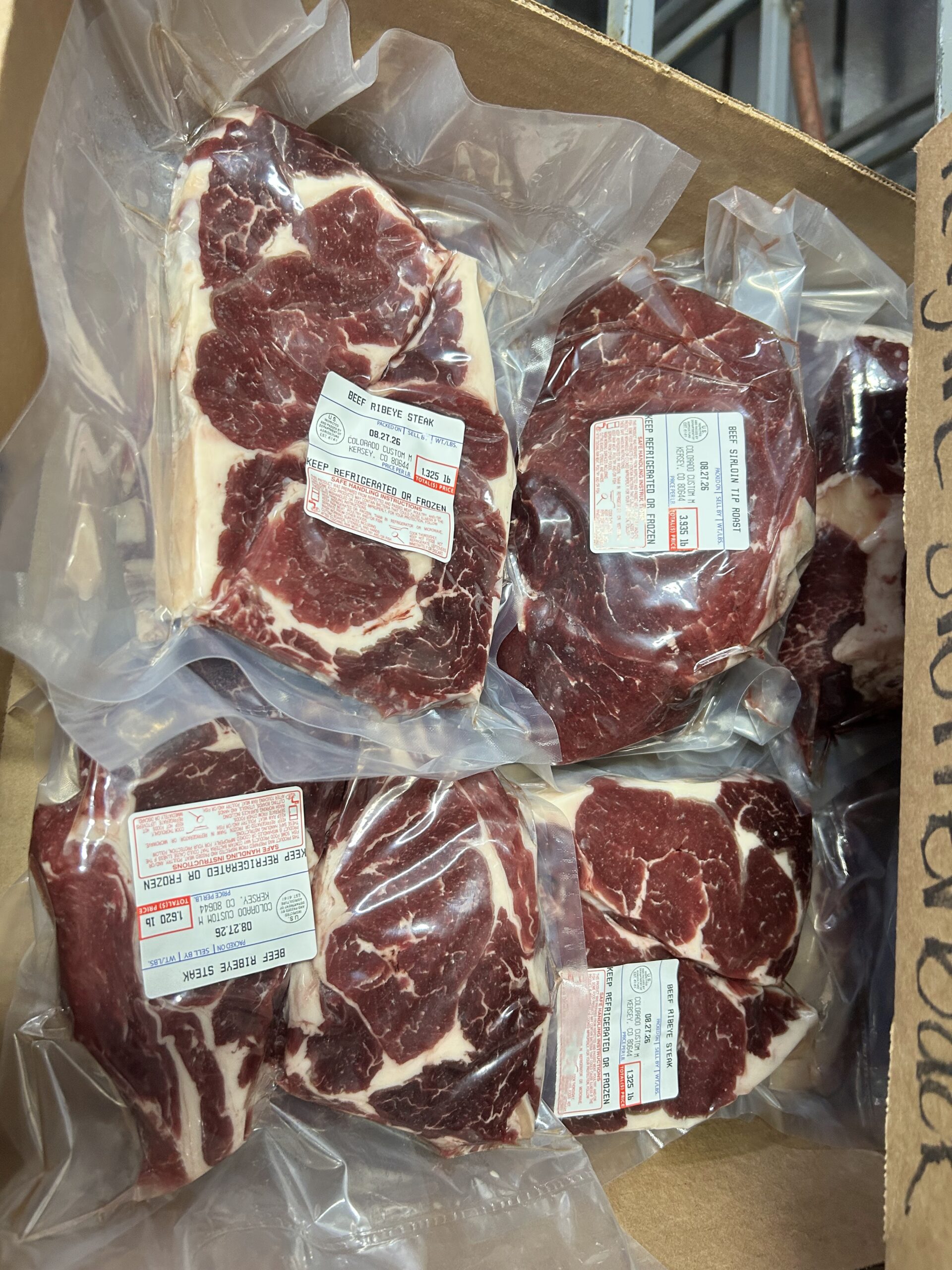
Steaks
Cuts may include ribeye, New York, sirloin, filet, and others depending on processing choices.
Roasts
Chuck, rump, and other roast cuts based on the cut sheet.

Other Cuts
Brisket, short ribs, stew meat, bones, organs, and specialty cuts may also be available.
Planning for a Side?
17.5–18 CU. FT.
Triple JC’s approximate planning recommendation for a side. Confirm space needs for your order, packaging and available freezer room.
YOUR ORDER, YOUR PREFERENCES
Custom Cuts Make Buying Direct Different.
When purchasing a larger quantity, customers can make processing selections based on how their family actually cooks and eats.
Depending on the processor and animal, selections may include:
- Steak thickness
- Roast sizes
- Ground beef package size
- Bone-in or bone-out options
- Specialty cuts
- Bones and organs
We’ll help make the process easier to understand so you’re not staring at a cut sheet wondering what everything means.
CURRENT + UPCOMING BEEF
Ask About Current & Upcoming Beef
Availability follows cattle readiness and processing schedules. Tell us what you’re interested in, and we’ll help you understand the options and timing.
GET BEHIND THE BEEF
Stay Connected to Triple JC Ranch.
New articles, beef availability, pre-order updates, and occasional ranch news —straight to your inbox.
By signing up, you agree to receive email updates from Triple JC Ranch. You can unsubscribe at any time.